Causal Layered Analysis: Privacy and Public Safety in Fort Collins, CO
Anticipating a potential referendum that could impose stricter rules and community oversight on public cameras, the Fort Collins Futures Council used Causal Layered Analysis (CLA) to move beyond surface-level debate and uncover the deeper beliefs, systems, and narratives shaping the issue.
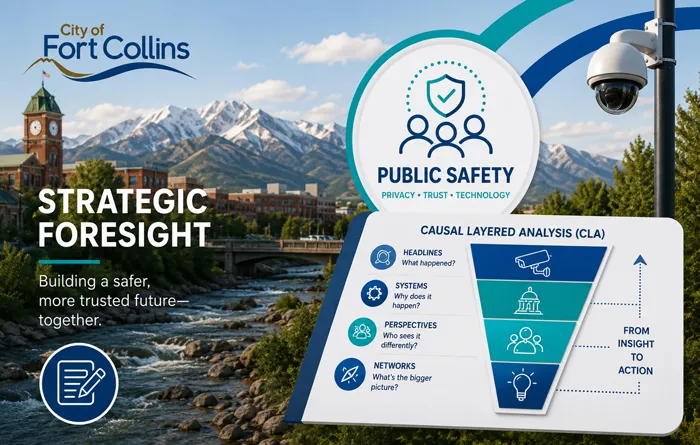
AFI Member City Fort Collins, Colorado leveraged their foresight workshop benefit to explore growing tensions between surveillance technology, public safety, privacy, and resident trust. Anticipating a potential referendum that could impose stricter rules and community oversight on public cameras, the Fort Collins Futures Council used Causal Layered Analysis (CLA) to move beyond surface-level debate and uncover the deeper beliefs, systems, and narratives shaping the issue.
The analysis revealed that the central tension was not distrust of local government itself, but concern that decision-making power rested with technology providers, reflected in the metaphor of "the fox guarding the henhouse." Through reconstruction, participants developed anew guiding narrative: "walking the well-lit pathway, together." This reframed residents as collaborators rather than passive recipients, shifted stakeholders from occupying opposing positions to moving toward a shared destination, and emphasized transparency as the foundation for trust.
The preferred future translated into tangible governance and engagement strategies, including resident advisory opportunities related to the adoption and use of surveillance technology, greater involvement of technology providers in trust-building efforts, and stronger governance around procurement and oversight. Ultimately, the Council's vision of success extended beyond technology deployment to shared decision-making, prioritizing people over profit, and recognizing that public trust is too valuable to sacrifice for technological advancement.
The Process: Causal Layered Analysis (CLA)
Organizations often continue practices long after they have become disconnected from their original purpose, strategy, or changing conditions. To address this challenge, futurist Sohail Inayatullah developed Causal Layered Analysis (CLA),a foresight method used by governments, businesses, and communities around the world to address complex and contested issues. CLA examines four layers of a challenge: visible symptoms, underlying systems, prevailing worldviews, and the deeper stories or metaphors that shape collective behavior. By moving through these layers, participants can identify the root causes sustaining current conditions and then reconstruct each layer to create a coherent and actionable preferred future.
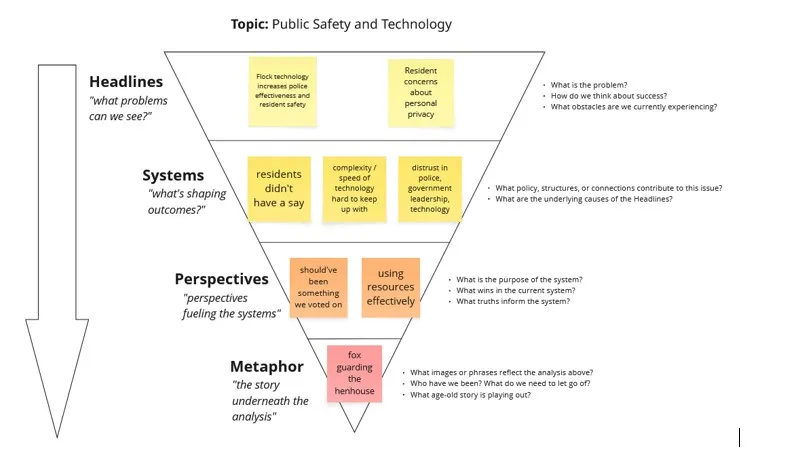
In Fort Collins, participants first deconstructed the challenge by examining visible concerns around surveillance technology, the systems influencing adoption and oversight, the assumptions shaping stakeholder perspectives, and the deeper metaphor of "the fox guarding the hen house." This process revealed that the challenge was not solely about technology, but about trust, participation, and who residents believed was shaping decisions.
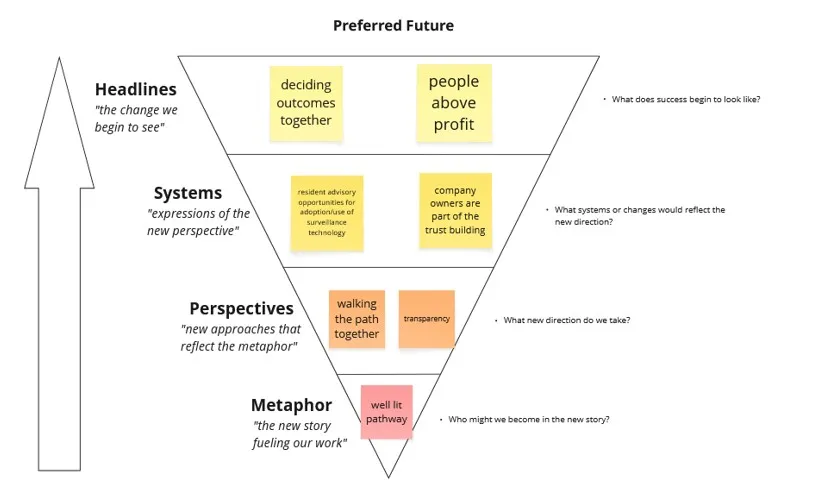
The group then reconstructed each layer to create a preferred future. The new metaphor, "walking the well-lit pathway, together," reframed the relationship between residents, government, and technology providers from suspicion to shared responsibility and movement toward a common goal. This shift informed new ideas for resident advisory opportunities, stronger transparency and governance practices, and greater involvement of technology providers in building trust with the community.
A few specific outcomes from the reconstruction included:
• Reframing the underlying narrative from a "fox guarding the henhouse" to a "well-lit pathway," where stakeholders move together toward safer and more trusted outcomes.
• Moving from residents feeling excluded to residents helping shape surveillance technology decisions.
• Shifting from distrust and competing interests to transparency, shared accountability, and collective stewardship.
• Defining success not only as effective public safety technology, but as residents having confidence that decisions are being made in the public interest.
By connecting symptoms, systems, perspectives, and underlying narratives, CLA helped the Council unearth perspectives on the root issues and brought clarity toward a shared vision for how public safety, privacy, and trust could be advanced together.
For more information on Strategic Foresight contact Hauson Le, the Alliance for Innovation Strategic Foresight Director.
Sign up to gain access to our network of innovators to receive updates on emerging trends and AFI research. Stay informed on the forces shaping local government. new snippet of text